The Complete History of the Adidas F50: Every Generation from 2004 to 2024
The Adidas F50 stands as one of the most distinctive speed boot silos in football history. Whether remembered for Lionel Messi’s dominant years or the vivi

The Adidas F50 stands as one of the most distinctive speed boot silos in football history. Whether remembered for Lionel Messi’s dominant years or the vivid neon colorways of the 2010s, the F50 has become a highly sought-after retro boot among collectors. The Adizero models, in particular, remain a grail for many. This is a generation‑by‑generation look at its evolution, from the original 2004 release to the 2024 revival.

2004–2005: The First Generation, Built for Pace
Adidas introduced the F50 in 2004 as a radical departure from tradition. The boot prioritised speed and agility over power or leather craftsmanship. The “F” stood for football, while “50” referred to the 50 days remaining until Euro 2004 at launch. Wingers like Arjen Robben quickly adopted it.
The original F50 featured interchangeable upper chassis, a concept so unusual that complete first‑generation sets are still chased by collectors today.
2006–2009: The Tunit Era – Fully Modular Design
The Tunit system defined this phase. Studs, chassis, and upper could all be swapped, a level of modularity rarely seen in football boots since. The Sprintframe soleplate kept weight low for rapid acceleration. At the 2006 World Cup in Germany, the F50.6 Tunit became an iconic piece of tournament kit.

By 2009, the F50.9 had been refined into a sleeker, lighter speed boot, setting the stage for the model that would change everything.
2010: The F50 Adizero – 165 Grams That Changed the Game
The 2010 F50 Adizero weighed just 165 grams, making it the world’s lightest football boot at launch. Lionel Messi wore it at the World Cup in South Africa, while Thomas Müller claimed the Golden Boot in the same silo. The HybridTouch upper offered a ball feel previously unattainable in synthetic boots.
The chameleon‑purple launch colourway remains one of the most coveted deadstock finds among vintage boot collectors.
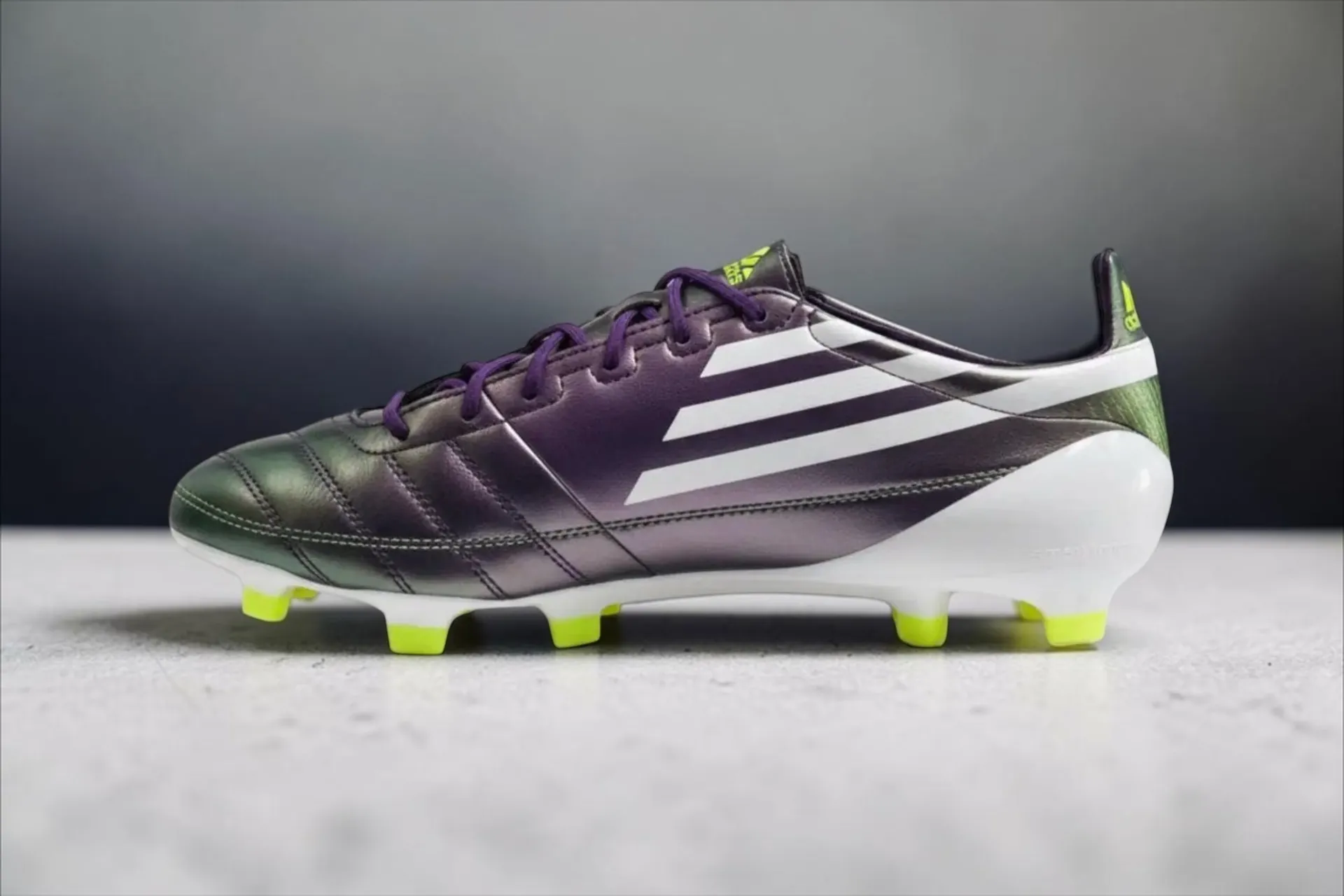
Original 2010 Adizeros in unworn condition have become genuinely rare.
2011–2014: Adizero II, III, IV – The Messi Years
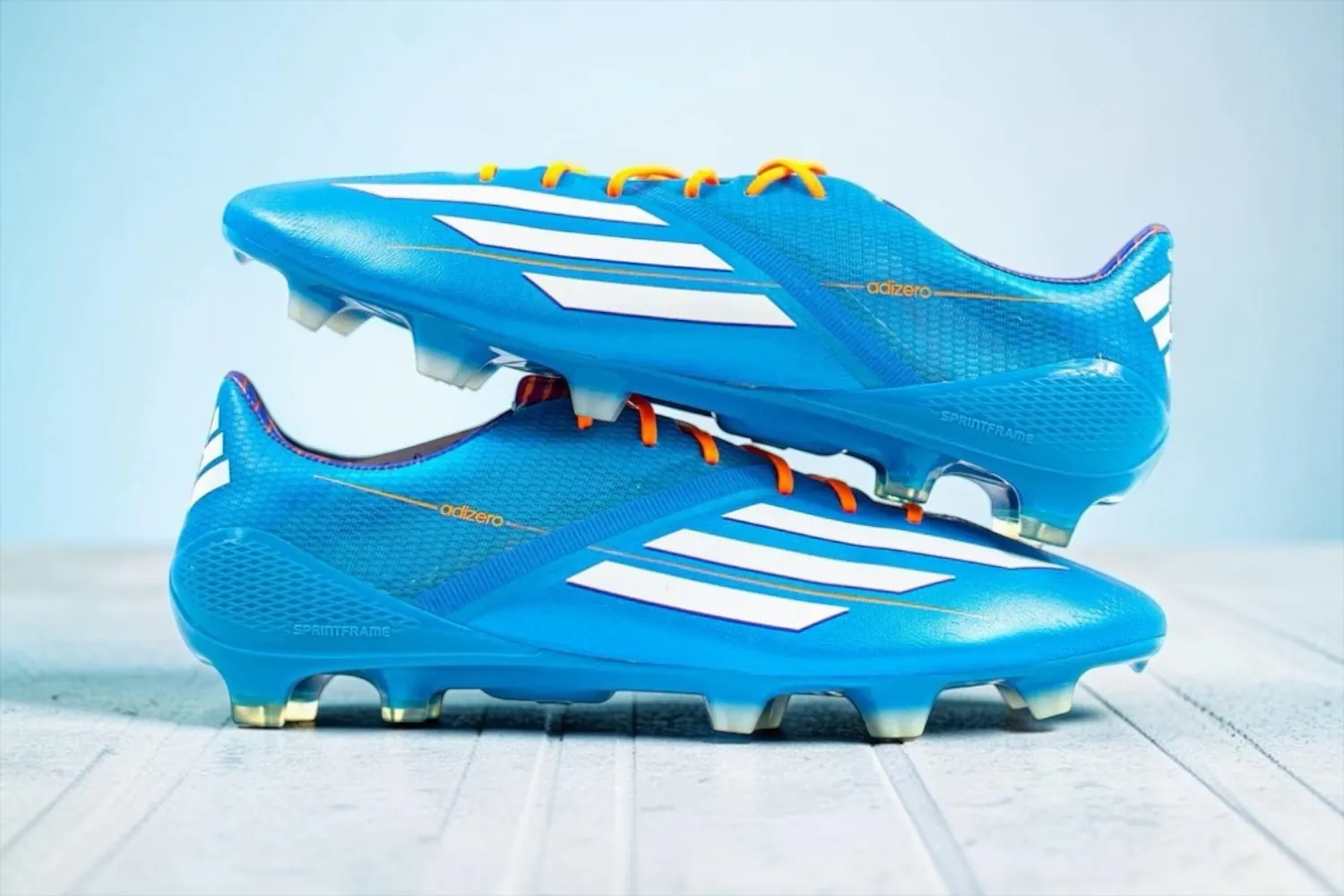
During Barcelona’s dominant era, the Adizero line became synonymous with Messi. Iconic colourways such as “Solar Slime” (2011) and “Messi Gold” turned into grail items for retro collectors. The 2012 model introduced miCoach compatibility, a cavity for a speed‑tracking chip, years before smart boots became mainstream. Messi‑exclusive editions from his 91‑goal season are among the most valuable F50s ever produced.
2015: The Discontinuation
In 2015, Adidas retired the F50 name, replacing it with the X silo as part of a complete range overhaul. That decision instantly made every F50 a finite resource, driving up demand for deadstock pairs.
2024–Today: The Revival
Nearly a decade later, Adidas brought the F50 name back. The modern F50 Elite carries the ultralight, speed‑first DNA of the Adizero era. Its release has further intensified interest in the original models, creating a perfect setup: new boots on the pitch, originals in the display cabinet.
Professionals Also Seek Vintage F50s
It is not only collectors who chase these classic boots. World‑class players such as Karim Benzema, Rafael Leão, Raphinha, Ousmane Dembélé, and Isco have been known to search for original F50s from the Adizero years. When players who grew up idolising that era can wear any modern boot but still return to the originals, it speaks volumes about the silo’s legacy.
Which F50 Should You Collect?
- For history: An original 2004–2005 F50 with Tunit components
- For the icon: The 2010 Adizero in chameleon purple, the 165g legend
- For the Messi connection: Any 2011–2014 Adizero in a Messi colourway (e.g., Solar Slime)
- For value growth: Limited editions and World Cup colourways in unworn condition
How to Spot an Authentic F50
- Check for original modular parts, such as Tunit soles and era‑specific tags from 2004 to 2015
- Verify colourway release dates (for example, “Solar Slime” launched in 2011)
How to Preserve Vintage F50s
- Cleaning: Wipe synthetic uppers with a damp cloth; avoid soaking to protect adhesives
- Storage: Keep in a dry environment to prevent soleplate yellowing
- Playability: Older F50s are still suitable for casual games, but truly rare pairs are best kept unworn
FAQs About the Adidas F50
Q: Can you still play in vintage F50s?
A: Yes. Their lightweight build and grip work well for fast‑paced matches, though rare colourways are usually more valuable if left unworn.
Q: Did Adidas re‑release the F50?
A: Yes. After merging the line into the X series in 2015, Adidas revived the F50 name in 2024 with the modern F50 Elite. The original 2004–2015 models remain the collector favourites.
Related search topics
- Adidas F50 History Every Generation from 2004 to Today football guide
- Adidas F50 History Every Generation from 2004 to Today latest updates
 WhatsApp
Looking for affordable football boots and jerseys made in China?
Message us on WhatsApp at +86 151 6027 2505, or find us on Instagram at @luxurycoca.
 Instagram