Artificial Grass Soccer Cleats: Design, Safety & Performance on Synthetic Turf
As 3G and 4G synthetic fields become the norm, natural turf is fading from the game. This shift demands footwear built for artificial surfaces. Artificial
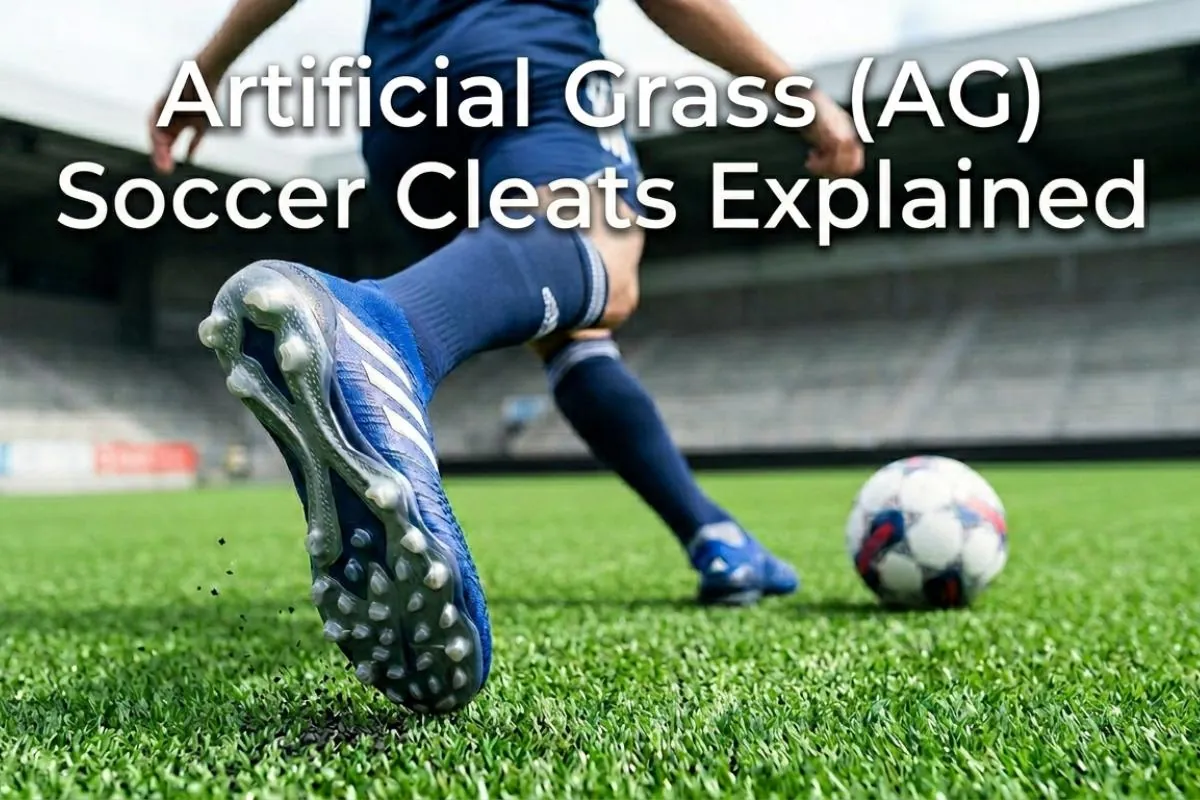
As 3G and 4G synthetic fields become the norm, natural turf is fading from the game. This shift demands footwear built for artificial surfaces. Artificial grass (AG) cleats are not simply another boot variant—they feature dedicated design, materials, and technology to master synthetic pitches.
The Engineering Behind AG Soleplates
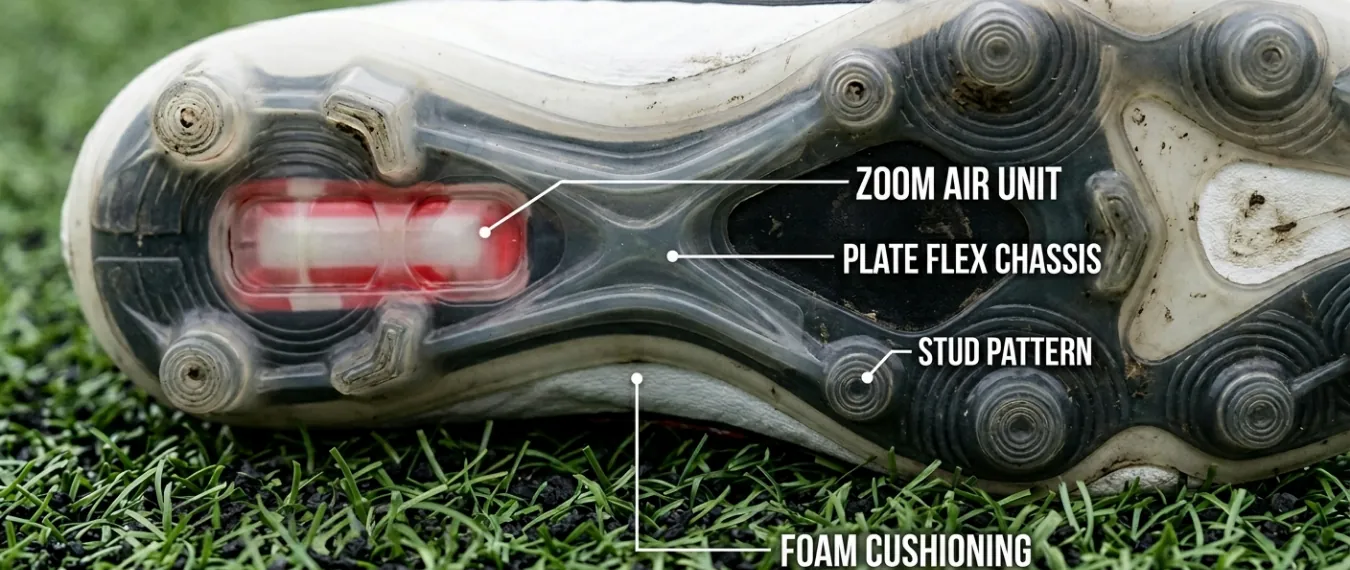
The upper often gets the most attention, but the outsole is the foundation of any cleat. The core difference between Firm Ground (FG) and Artificial Grass cleats lies in how they interact with the subsurface. FG plates are designed to penetrate soil and grass. On synthetic turf, there is no “give,” which leads to “stud lock”—aggressive blades or long studs getting stuck in the turf’s mesh backing. AG engineering replaces those blades with a system that sits on and in the synthetic fibers rather than stabbing through them.
Traction, Stud Pressure, and Injury Prevention
Safety is the most critical reason to choose AG cleats. The AG stud pattern is designed to keep players out of the physio’s office.
- Stud configuration: Unlike FG boots with 10 to 12 long studs, AG plates use a higher density of shorter, secondary studs. Many are hollowed out to reduce weight and increase surface area contact.
- Joint safety: Synthetic turf has high friction. A long FG stud can “bite” too hard, causing the foot to stay planted while the knee turns—a recipe for ACL, MCL, and ankle injuries. AG plates allow a smoother rotational release, letting you slide out of a turn safely.
- Pressure distribution: Long studs create “stud pressure” on hard synthetic bases. The dense AG configuration spreads weight evenly across the plate, reducing soreness after a 90‑minute match on 4G.
Durability: Combating Abrasive Surfaces and Heat
Synthetic turf acts like a sheet of plastic and sandpaper, harsh on footwear. Durability is a key pillar of quality AG cleats.
- Abrasion resistance: Friction from the ball, turf, and boot can shred premium K‑leather or thin knits in weeks. AG‑specific boots often feature a reinforced lip or sandpaper‑textured toe cap to prevent the upper from separating from the soleplate.
- Heat management: On a hot July afternoon, black rubber infill can reach over 120°F (49°C). This heat can melt standard FG boot glue, causing sole separation. AG boots use specialized high‑heat resistant adhesives designed for the thermal demands of modern turf.
- Material integrity: Wearing flashy FG boots on turf can cut their lifespan in half. Dedicated AG boots are built with stiffer, more resilient plastics that resist wear from abrasive synthetic blades.
Better Results: Speed and Agility on Turf
Beyond safety and durability, AG cleats offer a tangible performance edge.
- Explosive movement: Shorter studs lower your center of gravity, providing superior stability during high‑speed lateral cuts and explosive sprints. You feel more connected to the pitch.
- Energy return: Modern 2026 models use carbon‑fiber or TPU‑injected midsoles tuned to the bounce of 3G/4G pitches—absorbing impact and snapping back to propel you forward.
- Consistency: Natural grass is unpredictable—too dry like concrete, too wet like a swamp. Synthetic pitches offer consistent grip. AG cleats provide predictable, uniform traction whether the pitch is dry or recently watered.
Strategic Selection: Choosing Your AG Boot
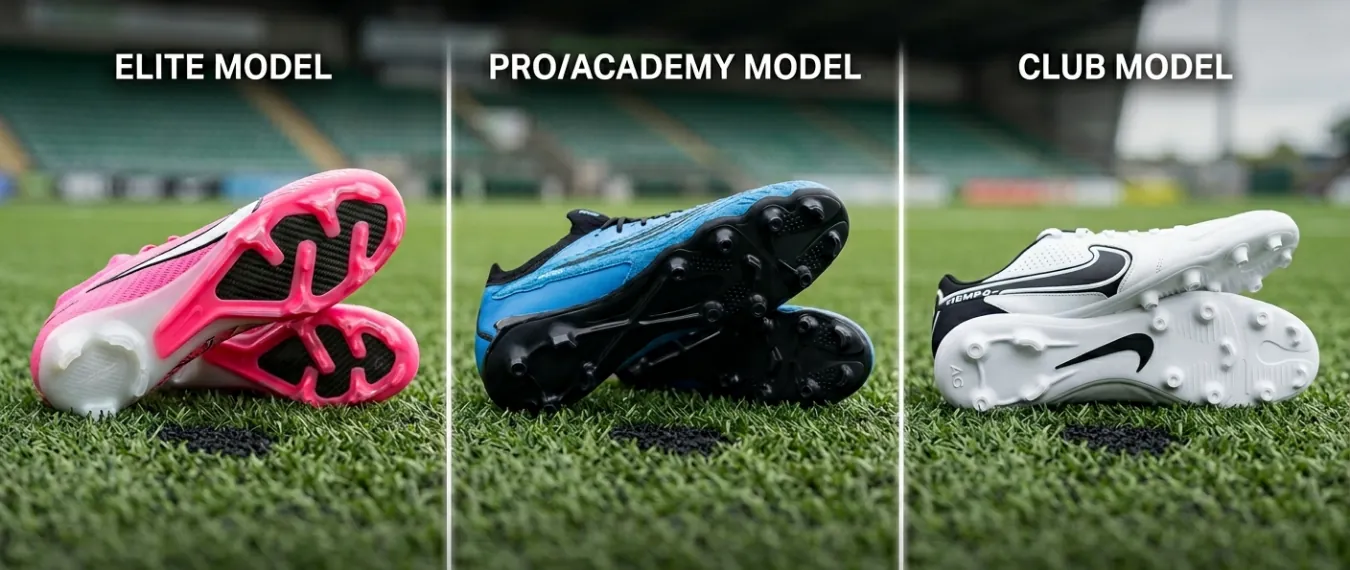
When browsing footwear, look for the “AG” or “MG” (Multi‑Ground) designation.
- Elite models: Pro versions with the lightest materials and most advanced energy‑return plates, ideal for competitive players.
- Pro/Academy models: A middle ground with the same AG stud pattern but slightly heavier, more durable materials that are easier on the wallet.
- Club models: For casual players or beginners, focused on comfort and surface‑specific safety.
Artificial Grass Cleats FAQs
1. Can I wear AG cleats on natural grass?
Yes, but with a caveat. AG cleats perform best on dry, firm natural grass. On soft or wet ground, the short studs won’t provide enough penetration, leading to slips during turns or accelerations.
2. Why do FG boots often break faster on artificial turf?
The high friction and heat of synthetic turf accelerate wear. FG boots lack the reinforced toe‑stitching and heat‑resistant glues found in AG cleats, causing the soleplate to peel away from the upper much sooner.
3. What is the difference between AG and Turf (TF) shoes?
AG cleats have a studded plate designed for “long” synthetic grass (3G/4G). Turf (TF) shoes have a flat, dimpled rubber outsole for very thin, carpet‑like turf (2G) or indoor facilities. For most modern outdoor synthetic pitches, AG is the superior choice for traction.
Related search topics
- Artificial Grass AG Soccer Cleats Explained football guide
- Artificial Grass AG Soccer Cleats Explained latest updates
 WhatsApp
Looking for affordable football boots and jerseys made in China?
Message us on WhatsApp at +86 151 6027 2505, or find us on Instagram at @luxurycoca.
 Instagram