The Complete Beginner’s Guide to Futsal: Key Differences from Soccer
Moving from a grassy outdoor pitch to an indoor hard court is only the most visible change when comparing futsal and soccer. The indoor game demands fewer

Moving from a grassy outdoor pitch to an indoor hard court is only the most visible change when comparing futsal and soccer. The indoor game demands fewer players, faster decision-making, and highly technical ball control. This guide explains how the surface, equipment, ball, and tactics reshape the sport.
What Makes Futsal Different from Soccer
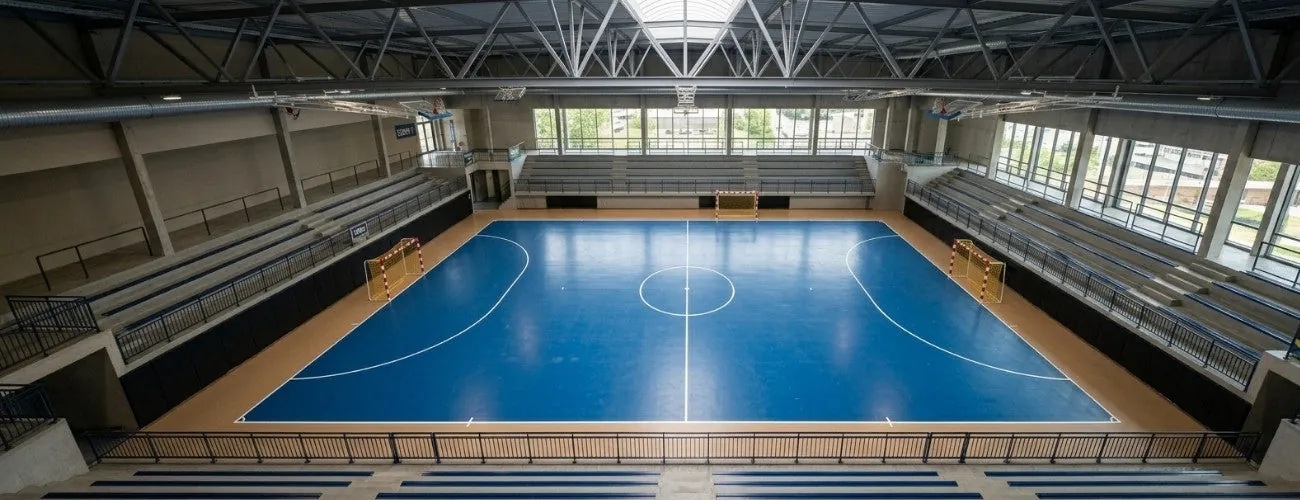
Futsal is a five-a-side game played on a hard surface such as gymnasium wood or smooth PVC tiles. FIFA recognizes the sport. Strict touchlines mean the ball is out of play as soon as it crosses the line, so every pass and touch must be precise. Accuracy is non‑negotiable.
Faster Pace, Tighter Spaces
Defenders in futsal do not sit back in a zone. They press hard and close down attackers quickly, forcing split‑second reactions. Players have little time to scan the court and plan their next move. The winning team is not the fastest or the fittest, but the one that adapts and reacts most quickly.
The Sole Touch
On a wood floor the ball behaves differently. Instead of trapping the ball with the inside of the foot, futsal players use the flat sole of the foot to pin it to the ground. This stops the ball’s momentum, shields it from defenders, and sets up rapid skill moves.
Essential Gear for Futsal vs. Soccer
Why Soccer Cleats Are Not Allowed
Plastic, molded, or metal studs that grip soft grass become a hazard indoors. They provide no traction on hardwood, increasing the risk of slipping and injuries such as ankle sprains or ACL tears. Facility managers also ban them because they scratch polished wood floors.
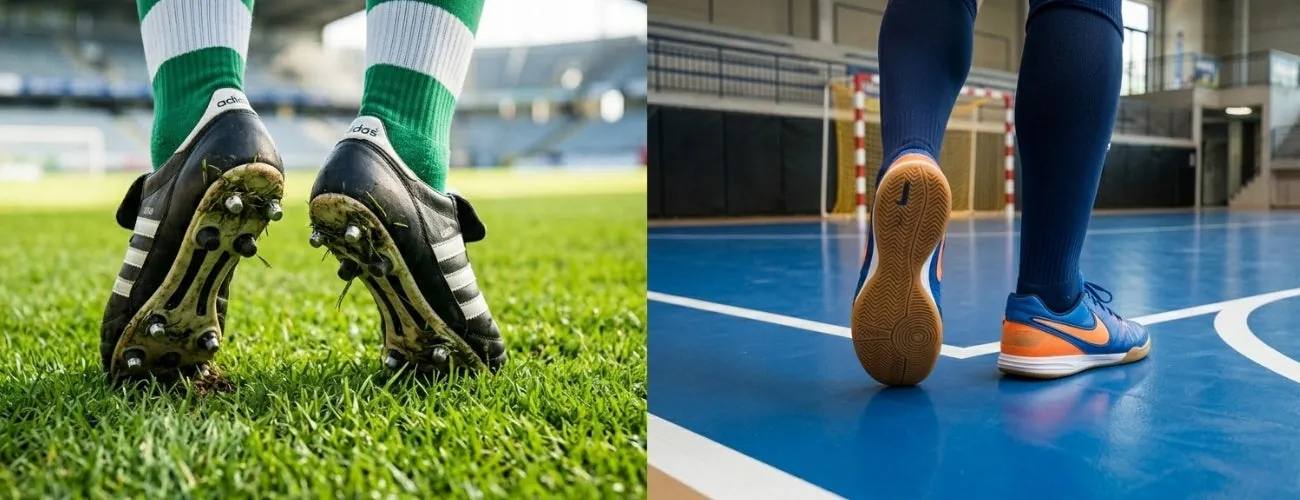
Choosing the Right Futsal Shoes
Hardwood courts are unforgiving on joints. When you cut or jump, impact shockwaves travel through ankles and knees. Quality futsal shoes have non‑marking gum‑rubber outsoles with flat foam midsoles that absorb heavy impacts. Herringbone or honeycomb tread patterns grip dusty gym floors, reducing slips and protecting joints.
Ball Design: Futsal vs. Soccer
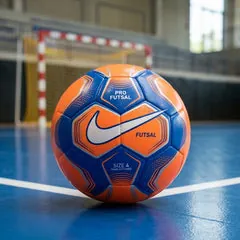
A standard outdoor Size 5 ball bounces too high on a basketball court, spending too much time at chest level. To fix this, futsal uses a specialized Size 4 ball. It has a smaller circumference but feels heavier because the interior bladder contains low‑rebound foam or a weighted core.
Tactical Breakdown: Formations and Flow
The foundational formation in futsal is the Diamond (1‑2‑1): one defensive anchor, two versatile wingers, and one target striker. This setup creates optimal passing lanes and full coverage on a compressed court.
Roles of Pivo, Ala, and Fixo
In futsal, roles are fluid. A Fixo often pushes forward in attack, while a Pivo must sprint back to defend the goal line.
| Position | International Name | Tactical Role |
|---|---|---|
| Fixo | Fixed | Defensive anchor who organizes the backline, stops counterattacks, and dictates tempo from deep positions. |
| Ala | Winger | Engine of the team. Left and right wingers need relentless stamina to drive attacking runs up the flanks and immediately sprint back to defend. |
| Pivo | Pivot | Target forward who plays high with his back to the goal, holds up the ball under pressure, and lays it off to oncoming wingers. |
Protection and Apparel for the Court
Shin Guards and Ankle Protection
Shin guards are mandatory, but bulky outdoor plastic plates restrict quick footwork. Most indoor players choose sleek, low‑profile guards with flexible sleeves and reactive impact foam that remains soft during movement but hardens on impact to protect the shins from stray kicks.
Goalkeeper‑Specific Gear
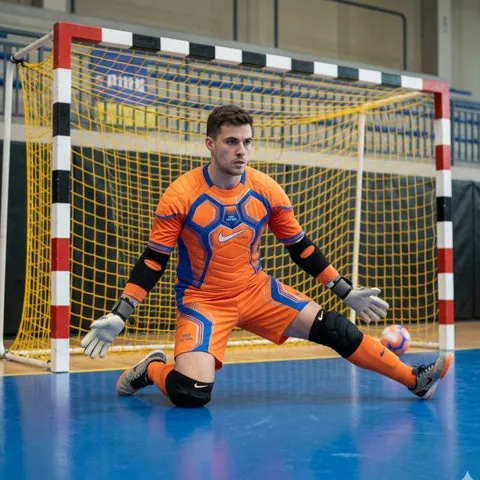
Futsal keepers rarely dive horizontally. Instead they use the “block save”: dropping flat to one knee and extending limbs like a wall. To avoid court burn and deep bruising on hardwood, they wear padded compression layers, knee sleeves, and specialized pads. Many also play without gloves to improve throwing control.
Futsal FAQs
How long does a normal futsal game last?
An official match consists of two 20‑minute halves, with one time‑out allowed per half. The clock stops every time the ball goes out of play or a whistle blows, guaranteeing full playing time.
Can the goalkeeper score in futsal?
Yes. A goalkeeper can score by kicking the ball into the opponent’s net during live play. However, a goal cannot be scored by throwing the ball directly into the opposing goal with the hands; the ball must touch another player first.
What is the “accumulated fouls” rule?
Teams are allowed five fouls per half. From the sixth foul onward, the opposing team gets a direct free kick from the 10‑metre penalty spot, and the defending team cannot form a wall to protect the goal.
What is the 4‑second rule?
Speed is essential in futsal. For almost every restart — kick‑ins, corner kicks, goal clearances, and free kicks — the player has exactly four seconds to put the ball back into play once they are ready. Exceeding this time gives possession to the opposing team.
Related search topics
- The Beginner s Guide to Futsal Futsal vs Soccer football guide
- The Beginner s Guide to Futsal Futsal vs Soccer latest updates
 WhatsApp
Looking for affordable football boots and jerseys made in China?
Message us on WhatsApp at +86 151 6027 2505, or find us on Instagram at @luxurycoca.
 Instagram