Goalkeeper Glove Maintenance: How to Extend the Life of Latex Palms
High-end goalkeeper gloves are expensive and have a naturally short lifespan, but a few simple habits can significantly prolong their usefulness. The key i

High-end goalkeeper gloves are expensive and have a naturally short lifespan, but a few simple habits can significantly prolong their usefulness. The key is understanding what causes the most damage—mainly erosion and water—and learning how to minimise that damage without sacrificing grip.
Erosion
The palms of premium gloves are made from natural latex, which offers excellent grip on all ball surfaces but wears very quickly when rubbed against anything rough. Think of Formula 1 tyres: a soft compound gives top grip for a few laps, while a hard compound lasts longer but offers less cornering performance. Latex is similar—exceptional grip, very low abrasion resistance.
What causes erosion?
There are three main ways a glove palm erodes:
- The palm contacts the ground when falling or pushing up from the ground.
- Putting on a glove while the other hand is already gloved.
- Continuously pulling up socks.
The second and third points wear only the fingertip area, while the first wears the base of the palm.
Common myth: erosion from rubbing against the ball. This is false. The ball’s surface is smooth, so the friction it creates is negligible.
It is also important to know that a glove retains its original grip even after 50% of the latex thickness has eroded. Many professionals use worn gloves at elite level without issues.
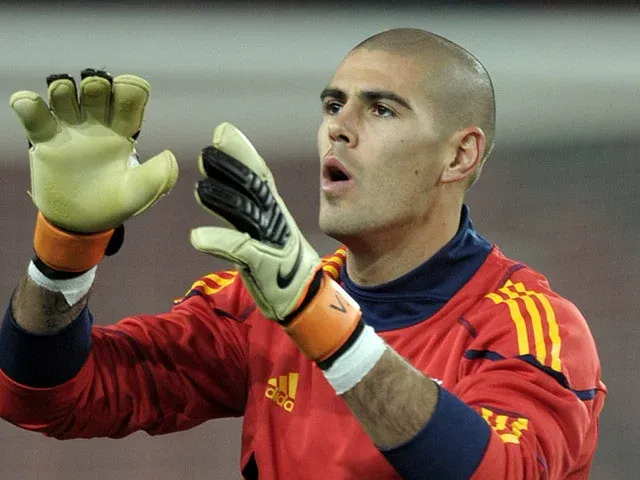
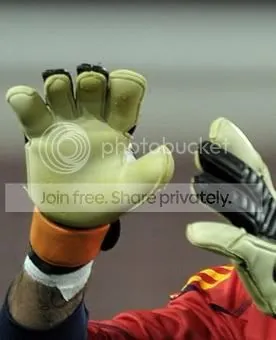

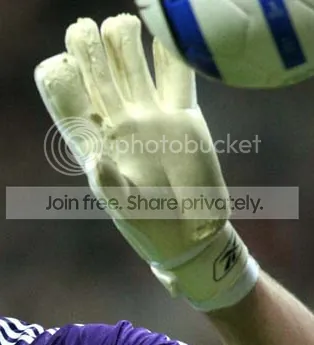
How to reduce erosion
The solution is simple in concept but requires practice: fall and get up without placing your palms on the ground. Some falls make this unavoidable due to speed or loss of balance, but for routine movements, use your fist, forearm, or shoulder to support your weight instead of the glove palm.
When inserting your hand into a glove, do it carefully. Avoid the hook-and-loop area, which is very aggressive to latex. Pull the glove on slowly and use the built-in puller tabs—they are designed to help you put the glove on without damaging the latex.
Water
Water is the most destructive external agent for goalkeeper gloves. It is not as visible as erosion, but it significantly reduces grip. Have you ever had a glove that looks clean but feels stiff and offers poor grip? That is the result of poor water management.
Latex needs some water to function: dirt reduces grip, wetting palms during matches improves grip, and rain soaks the gloves. The goal is to minimise the damage water causes.
How to wash goalkeeper gloves
Because water deteriorates latex, wash gloves as rarely as possible. After a game, simply wet the palms and rub them together to remove surface dirt. (Do not try to remove the greyish colour left by artificial turf rubber—it does not come out and does not affect grip.)
If the glove is very dirty with mud or similar residues, a deep wash is necessary. Never wash goalkeeper gloves in a washing machine. Machine washing destroys the foam layer under the latex that provides cushioning. The latex may look shiny and intact, but it loses all water absorption, turning a high-end glove into a hard‑terrain glove.
Correct washing process
Put both gloves on your hands and wet the palms under a tap.
Apply a small amount of glove detergent to each palm. If you do not have specialised detergent, neutral hand soap can be used, but note that it is more aggressive to latex than dedicated glove detergent.
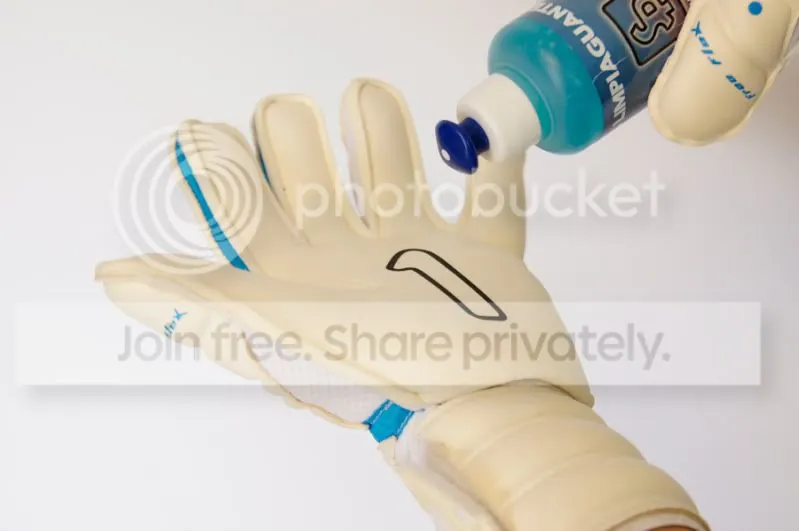
- Rub one palm firmly against the other so the detergent spreads and friction removes dirt. You can also rub the backs of the gloves together.
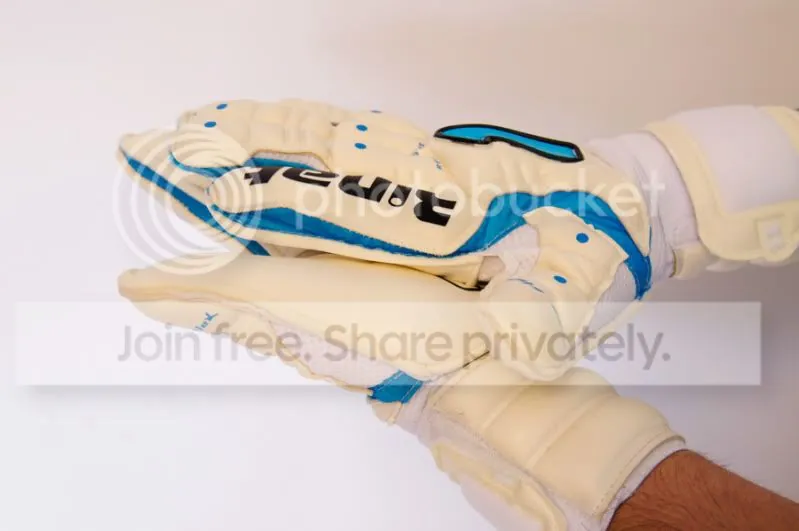
- Rinse the gloves thoroughly until all detergent and dirt are gone. Soak the gloves in water and wring them out repeatedly. Do not worry about damaging the seams—they are strong enough. Remove as much water as possible to shorten drying time. If the gloves have removable finger protections, take them out before rinsing.
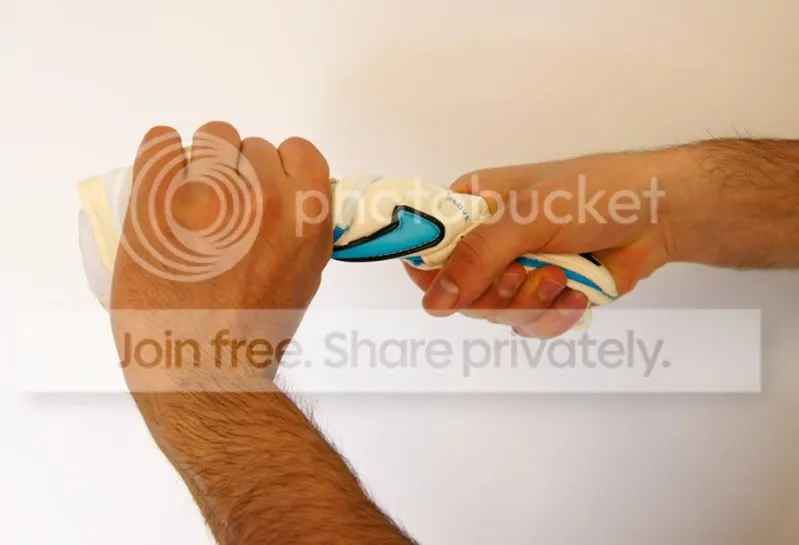
- Drying is the most delicate step and the one that most affects glove longevity.
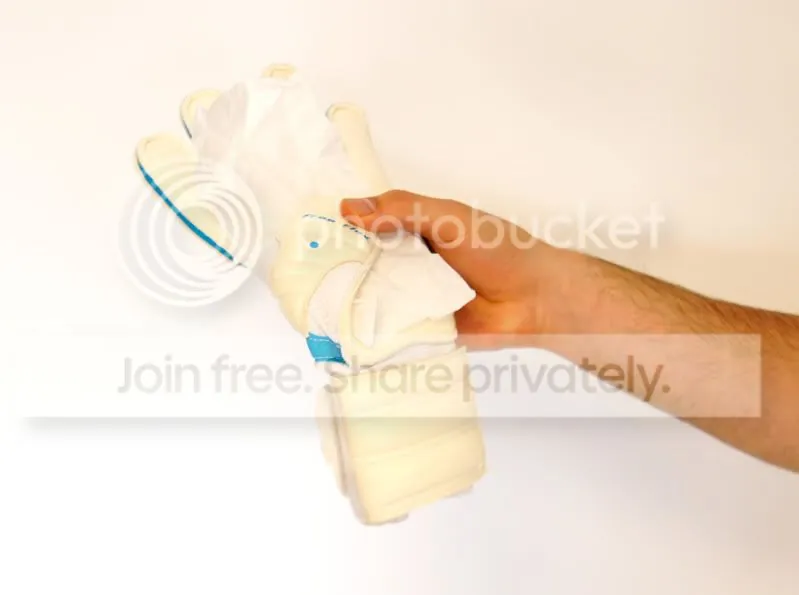
- Place a couple of sheets of newspaper inside each glove. Newspaper is highly absorbent and speeds up internal drying.
- Hang the gloves in a dry, ventilated area (not a bathroom, which retains humidity). Keep them away from direct sunlight, radiators, dryers, or open‑air tents.
- Once the gloves are completely dry, store them in a way that prevents latex from sticking to itself. The thumb tends to fold and stick to the palm. Cut a piece of paper to act as a barrier between the palm latex and the thumb latex. Place the gloves in their original plastic case and store them in a cupboard or drawer, protected from external agents.
Spitting on the palms
Wetting the palms during a match or training session considerably increases grip—similar to wetting your fingertip to turn a newspaper page. However, simply wetting the glove with water before going on the pitch dries within minutes. Soaking the glove keeps it wet longer but makes the latex waterlogged, which reduces grip initially.
The common solution—spitting on the palms every few minutes—contains enzymes that digest food and protect tooth enamel but are harmful to latex.
Better alternatives
- Use a glove‑specific adhesive spray. These sprays contain no chemical agents that damage latex, have a higher viscosity than water so they evaporate more slowly, and provide better contact with the ball.
- If spray is not available, carry a water bottle and wet the palm of the glove throughout the match or training session.
Related search topics
- goalkeeper gloves repair
- how to take care of goalkeeper gloves
- how long do goalkeeper gloves last
- how to keep goalkeeper gloves in good condition
 WhatsApp
Looking for affordable football boots and jerseys made in China?
Message us on WhatsApp at +86 151 6027 2505, or find us on Instagram at @luxurycoca.
 Instagram