10 Tips to Elevate Your Soccer Game to the Next Level
Whether you are a player looking for extra advice to take your game to the next level, or a parent who wants to support an aspiring player, these tips draw
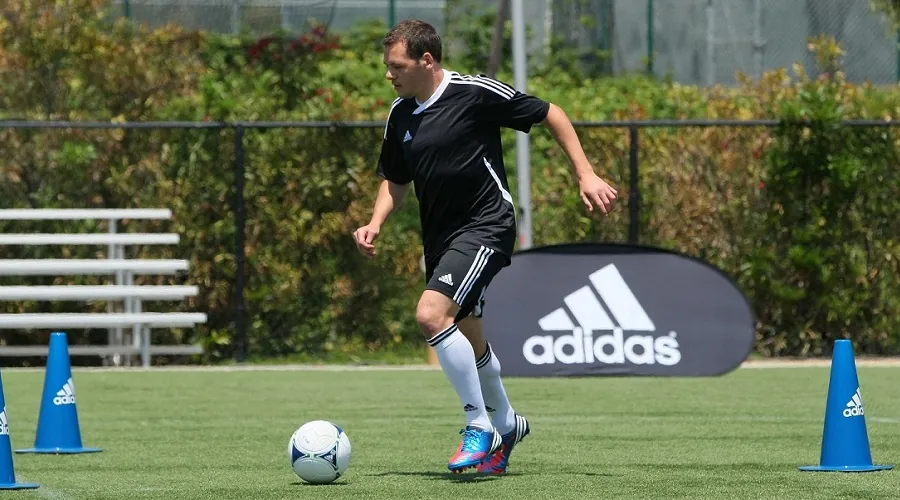
Whether you are a player looking for extra advice to take your game to the next level, or a parent who wants to support an aspiring player, these tips draw from a career of playing the beautiful game. From semi‑pro experience in Ireland, a National Championship at UCSB, a US Open Cup win, an MLS Cup final, a PDL title, and nearly a decade of successful Sunday league football, these lessons can help you improve your skills, mindset, and teamwork.
1. Be a Student of the Game
No matter how good you are, you can always become better. Be humble, show humility, and open your mind to learn from those with experience. Take what you are given and apply it in your game. Growing up, watching players who played your position is a powerful tool. For example, Andrei Kanchelskis, Damian Duff, and Arjen Robben were wingers I loved watching. I would key in on their movement, look for ways they beat players, and watch their timing on passes and crosses. In practice or games, I tried to replicate what they did. I failed a lot, but I also learned what worked best for my skill set.
2. Set Short Term Goals
Every soccer player dreams of becoming a professional. But for every player who makes it, there are 100 who do not. Instead of just daydreaming, start making short‑term goals that will help you get there. It could be as simple as setting a new juggling goal and practicing until you achieve it, working on your shooting with a crossbar challenge, or setting a target of 5 goals and 5 assists in your next 10 games. Create attainable goals that improve your skills and keep you focused on improving every day.
3. Success Comes From Failure
Every player has experienced defeat. Lionel Messi and Cristiano Ronaldo have faced plenty of disappointment. The key is not always winning—it is what you do when you face defeat. Will you feel sorry for yourself and sulk, or will you get right back on the horse and find ways to ensure it does not happen next time? It is about how you bounce back, looking at your flaws, fixing them, and lifting up your teammates. In 2004, we lost the National Championship final on penalties to Indiana. In 2006, 10 players from that squad returned to the final against UCLA. We talked about the pain of losing in 2004 and not wanting to feel that again. After the first 20 minutes, we had scored and hit the post twice—we came out firing, wanting to put that loss in the past.
4. Learn From Better Players
At New England Revolution, right midfielder Steve Ralston was, in my opinion, the best right mid to ever play in MLS. He was so much better than me, but I took the opportunity to watch him, study his game, play alongside him, and develop my skill set from his experience. I asked him questions about taking on players, finding the right moment to cross, and what he looked for from strikers. My game improved dramatically, and that experience stayed with me. At every level, look at players who play your position and find a way to benefit from studying their style. If that player is a teammate you are competing with for playing time, do not see them as an enemy—see them as a challenge that pushes you to improve.
5. Talk to Your Coaches
Many players fail to take advantage of this because of intimidation or fear of being seen as weak. But coaches want to see a willingness to improve. If you are a fringe player, ask for tips on where you can improve to help the team. Focus on what you need to do to make the coach’s life easier. Apply the advice in practice and games; it gives you a platform to prove you are a player the coach can work with. Be the first to show up to practice and the last to leave. When I was around 14, a former pro player came to watch one of my games. Even though I thought I played well, he offered two pieces of advice: stop with silly goal celebrations, and when whipping in crosses, strike the ball closer to the middle. He demonstrated with a few crosses. I embraced that advice, and it made a huge difference long term.
6. Comfort Creates Confidence
Having boots that fit well and match your playing style allows you to play without distraction. Being comfortable creates confidence, and confidence lets you be your best on the pitch. If your boots are too big or do not match your foot shape, you will focus on that instead of your performance. This is especially true with new soccer cleats. Break them in by wearing them around the house or in practice before using them in a game. Let them adjust to your foot shape in a relaxed environment. One of the worst things is feeling discomfort five minutes into an important game. Always have a trusty back‑up pair you can switch into.
7. Work Hard, Play Smarter
For most coaches, working hard and showing commitment earns their trust. On the pitch, give 100%: close down opponents fast, help teammates, talk and communicate, make smart decisions on the ball. Don’t duck out of 50/50 challenges, and don’t run around like a headless chicken. Sometimes chasing a lost cause is worth it, but a left back should never be tracking a player near the opposition’s corner flag.
8. Teammates Work for Each Other
If your teammate loses the ball, see it as your opportunity to win it back. If you lose the ball, thank your teammate when they win it back. Good teammates give everything for each other, working hard and fighting together through good and bad moments.
9. Respect the Game and the Player
This tip is for parents. Don’t be “that parent” on the sideline yelling and screaming instructions. Let the coach do their job and let your player be expressive, free of fear and pressure, making decisions and learning from mistakes. Don’t yell at officials—show the respect you expect from your child. Players respond more positively to cheers and applause than to yelling from the sideline. Your responsibility is to help your player enjoy the game. If your player can share a brief smile whether the game ended in a win or a loss, you are doing your job.
10. You Don’t Need an Audience
The best time to work harder is when no one else is watching. If you want to set a statement, get out into an empty field alone and work your butt off to improve. Take any opportunity to get extra work in. Then, when you are with your teammates, let them see how your extra practice is paying off. Show them you are a leader who not only wants to take their game to the next level but puts the hard work in to get there. As Anson Dorrance said, “The vision of a champion is someone who is bent over, drenched in sweat, at the point of exhaustion when nobody else is watching.”
Related search topics
- Top 10 Tips To Take Your Soccer Game To The Next Level football guide
- Top 10 Tips To Take Your Soccer Game To The Next Level latest updates
 WhatsApp
Looking for affordable football boots and jerseys made in China?
Message us on WhatsApp at +86 151 6027 2505, or find us on Instagram at @luxurycoca.
 Instagram