Soccer Formations Explained: A Guide to the 4-3-3 and Other Key Tactics
Soccer is a game of strategy, with formations at the heart of it. Understanding the different soccer formations is essential for new fans, budding coaches
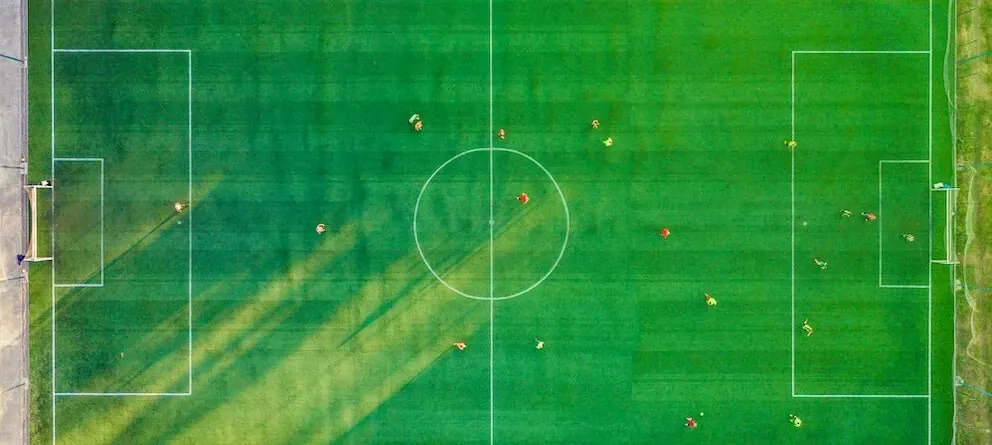
Soccer is a game of strategy, with formations at the heart of it. Understanding the different soccer formations is essential for new fans, budding coaches, or existing fans needing a refresher. All soccer formations balance attack and defense, playing to the strengths and styles of the team.
From the widely used 4-3-3 to lesser-known setups, this guide covers the key formations every soccer enthusiast should know.
4-3-3 Soccer Formation
Image Credit: Wikimedia Commons
The 4-3-3 is arguably the most common soccer formation. It features four defenders, three central midfielders, and three forwards.
This formation promotes width, allowing fast-paced attacks and fluid gameplay between defense and offense. It suits teams that like to control possession and apply pressure high up the pitch.
Tactical Advantages
- High press – Enables the team to win the ball back quickly in the opponent’s half.
- Width in attack – Wingers force the opposition defense to spread out, creating space for central players.
- Midfield balance – The three midfielders support both attack and defense.
Potential Limitations
- Vulnerable to counter-attacks – Risk of exposure if fullbacks push up.
- Too many midfielders – If the opponent uses four or five midfielders, maintaining control can be difficult.
- Needs high fitness levels – Relies on high energy, especially from wingers and fullbacks.
Teams That Made It Famous
Barcelona is best known for using the 4-3-3 in their tiki-taka style. Liverpool FC have also employed it, while the U.S. Men’s National Team has used it effectively in recent years.
4-4-2 Soccer Formation
Image Credit: Wikimedia Commons
The 4-4-2 is a traditional setup using four defenders, four midfielders, and two forwards. It provides simplicity and balance, making it popular at all levels and easy to coach.
Tactical Advantages
- Solid shape – Two rows of four offer stable defense and positional discipline.
- Dual strikers – Two forwards maintain a constant attacking threat and provide support.
- Wide support – Wingers contribute at both ends of the pitch.
Potential Limitations
- Too many midfielders – Can be outnumbered by teams playing three in the center.
- Limited creativity – Relies on crosses and long balls, which can slow play.
- Predictable style – Easily read and countered by modern tactical setups.
Teams That Made It Famous
Manchester United dominated the Premier League with the 4-4-2 during their 1990s glory days, featuring players like David Beckham, Ryan Giggs, and Eric Cantona. In MLS, LA Galaxy have used it successfully in many championship runs.
4-2-3-1 Soccer Formation
Image Credit: Wikimedia Commons
The 4-2-3-1 formation features four defenders, two defensive midfielders, three attacking midfielders, and one striker. It allows creativity while supporting defense and is a modern favorite.
Tactical Advantages
- Defensive cover – Two defensive midfielders provide a solid line in front of the back four.
- Creativity – The attacking midfielder (No. 10) can dictate play behind the striker.
- Flexibility – Easily shifts to a 4-3-3 or 4-4-1-1 during play.
Potential Limitations
- Forward isolated – The striker risks being cut off unless link-up play is strong.
- Reliant on midfield – Creative weight rests heavily on the attacking midfielder.
- Wide vulnerabilities – Wingers must balance defense and attack.
Teams That Made It Famous
Germany won the 2014 World Cup using the 4-2-3-1. In MLS, the Portland Timbers and Seattle Sounders have used it to bring success.
3-5-2 Soccer Formation
Image Credit: Wikimedia Commons
This formation uses three central defenders, five midfielders (often with wing-backs), and two forwards. It dominates the midfield while retaining a solid backline.
Tactical Advantages
- Central dominance – Numbers in midfield give greater control over possession and tempo.
- Wing-back involvement – Provides width without sacrificing midfield numbers.
- Dual-threat – Two forwards constantly challenge defenders.
Potential Limitations
- Pressure on wing-backs – Requires high stamina and awareness.
- Defensive vulnerabilities – Gaps can open if wing-backs are caught high.
- Discipline – Mistakes in transitions can lead to overloads.
Teams That Made It Famous
Juventus and Chelsea adopted the 3-5-2 under manager Antonio Conte. In the U.S., Nashville SC has used it to maximize midfield strength.
3-4-3 Soccer Formation
Image Credit: Wikimedia Commons
A popular formation for teams with strong strikers, the 3-4-3 uses three center-backs, four midfielders (with wing-backs), and three forwards. It focuses on attack and aggressive pressure.
Tactical Advantages
- Constant pressure – The front three press high, forcing defensive errors.
- Midfield versatility – Allows the team to adapt to different in-game shapes.
- Offensive overload – Creates superiority in wide and central areas.
Potential Limitations
- Defensively risky – Three defenders can be exposed by wide counters.
- Coaching complexity – Requires excellent tactical discipline and communication.
- Risk of fatigue – Wing-backs must cover long distances throughout the game.
Teams That Made It Famous
Chelsea used the 3-4-3 regularly in their 2016–2017 Premier League-winning season. Atlanta United has also used it to provide creative attacking options.
4-1-4-1 Soccer Formation
Image Credit: Wikimedia Commons
The 4-1-4-1 is a modern formation with four defenders, one holding midfielder, four midfielders in front, and one striker. It offers midfield control while remaining compact in defense.
Tactical Advantages
- Strong defensive turns – The holding midfielder surveys the back line and influences play.
- Midfield flexibility – Allows easy switching between attacking and defensive setups.
- Controlled pressing – Ensures organized pressure on the ball.
Potential Limitations
- Forward isolated – The striker can be left without adequate support.
- Gaps in the central line – Requires careful coordination to avoid being bypassed.
Teams That Made It Famous
Manchester City, under Pep Guardiola, regularly uses variations of the 4-1-4-1, with great success in the Premier League. New York City FC has also used it when controlling possession.
Other Soccer Formations
While the formations above are the best-known, others are used to mix up play and find success.
- 3-2-4-1 Formation – A bold setup focusing on high-pressing wing-backs and attacking overload. Often used by Manchester City.
- 4-2-2-2 Formation – Allows a narrow, vertical approach ideal for teams with strong central players.
- 3-4-1-2 Formation – A hybrid shape with solid defense and an attacking playmaker behind two strikers.
- 4-3-2-1 Formation – Known as the “Christmas Tree,” it focuses on central creativity and controlled build-up.
Switching between formations provides flexibility and allows teams to adapt their style to opponents.
Soccer Formations FAQ
1. What is the best formation in soccer?
No single formation is considered the best. Success depends on the team’s strengths, opposition tactics, and game context. Effective coaches adjust formations based on the situation and available players.
2. Why is 4-3-3 so popular?
The 4-3-3 balances defense, midfield, and attack, making it strong for pressing, possession, and quick transitions. It suits teams with strong wingers and dynamic full-backs.
3. Why is 4-2-3-1 so popular?
The 4-2-3-1 provides a solid defensive foundation with two holding midfielders, while creative players focus on attack. It is versatile and widely used in modern soccer.
4. How do teams choose the right formation?
Choosing the right formation depends on player strengths, opponent styles, tactical knowledge, and match context. Coaches adjust to injuries, fitness, home/away games, and in-game objectives.
5. Can teams change formation during a game?
Yes, formation changes are normal. Coaches may switch based on goals scored, red cards, or mismatches with the opponent’s style. Players are trained to adapt easily.
6. What’s the difference between formations with three and four defenders?
Three-defender formations use wing-backs for width and defensive coverage, allowing more midfield control. Four-defender formations rely on full-backs and prioritize stability, which is familiar to most players.
Understanding soccer formations gives greater insight into how teams interact. When watching, you will now recognize different styles of play and tactical approaches.
Related search topics
- Different Soccer Formations to Know Including the Powerful 4-3-3 football guide
- Different Soccer Formations to Know Including the Powerful 4-3-3 latest updates
 WhatsApp
Looking for affordable football boots and jerseys made in China?
Message us on WhatsApp at +86 151 6027 2505, or find us on Instagram at @luxurycoca.
 Instagram