Soccer Terminology Explained: A Beginner's Guide to Rules, Positions, and Common Terms
Learning soccer terminology can feel like decoding a new language for beginners. Between abbreviations, slang, and tactical terms, new players and fans oft
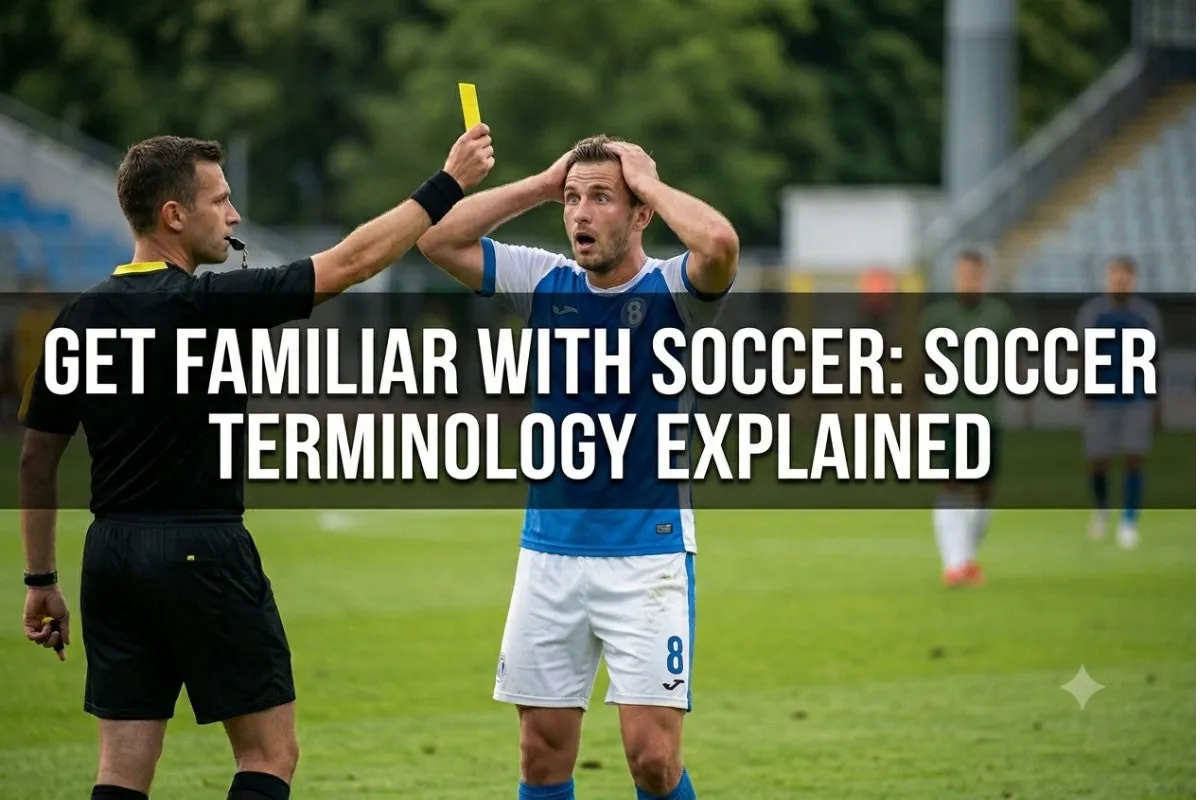
Learning soccer terminology can feel like decoding a new language for beginners. Between abbreviations, slang, and tactical terms, new players and fans often struggle to keep up. However, understanding the basic rules, positions, and key phrases makes it much easier to follow a match or join in. This guide breaks down the essential concepts every soccer newcomer needs.
What Are the Basic Rules of Soccer?
Before diving into tactics, it helps to know the field layout and how the game restarts.
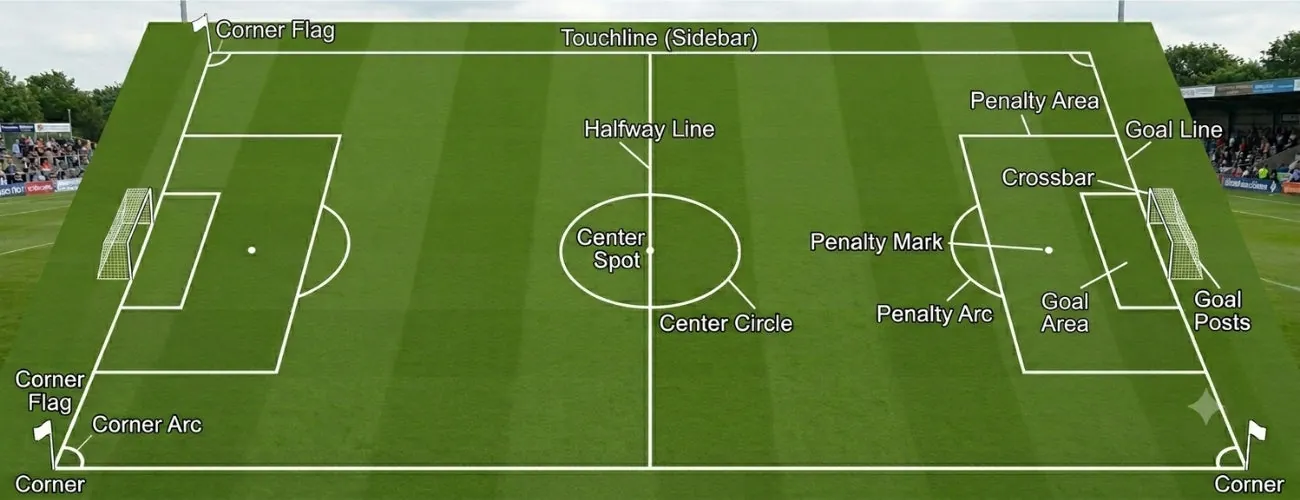
The long sides of the pitch are called touchlines, and the shorter lines at each end are goal lines. A standard professional soccer match lasts 90 minutes, divided into two 45‑minute halves. Youth games may be shorter. The clock does not stop for play; instead, the referee adds stoppage time at the end of each half for injuries or substitutions.
When the ball crosses over a touchline, play restarts with a throw‑in. The player must throw the ball with both hands while keeping both feet on the ground. If the attacking team kicks the ball past the opponent’s goal line, the defending team takes a goal kick from the six‑yard box. If the defending team knocks it out over their own goal line, the attacking team gets a corner kick from the nearest corner arc.
Decoding Crucial Soccer Game Concepts
Soccer is highly strategic, with specific rules that shape how teams defend, attack, and position themselves.
The Offside Rule, Set Pieces, and Tactical Terms
The most infamous rule is the offside rule.
Offside occurs when a player receives the ball from a teammate and is closer to the opponent’s goal line than both the ball and the second‑last defender (usually the last outfield player). This rule prevents “goal‑hanging” and encourages passing rather than waiting near the net.
If a foul is committed, the referee awards a set piece. A direct free kick allows scoring immediately. An indirect free kick (signaled by the referee holding one arm straight up) requires another player to touch the ball before a goal can count. Serious fouls inside the defending team’s penalty area result in a penalty kick.
Tactically, a clean sheet means the opposing team scored no goals. When a player scores three goals in a single match, it is called a hat trick.
From Goalkeepers to Forwards: Soccer Roles Explained
| Position | Common Abbreviations | Standard Player Count | Main Responsibility |
|---|---|---|---|
| Goalkeeper | GK, Keeper | Exactly 1 | Protects the net; only player allowed to use hands/arms (inside the penalty box). |
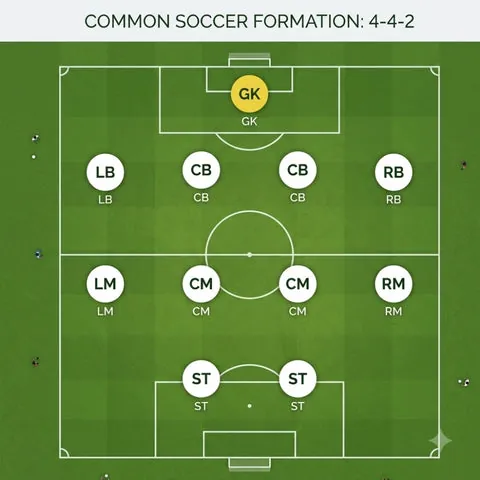
| Defenders | CB (Center‑Back), FB (Full‑Back) | Typically 4 (2 center‑backs, 2 full‑backs) | Stop opposing attackers, guard the flanks, clear the ball from danger. |
| Midfielders | Mids, CM, AM, DM | 3 to 5 players | Dictate tempo, win back possession, link defense to attack. |
| Forwards | Strikers, Wingers | 1 to 3 players | Stay closest to the opponent’s goal to convert chances and score. |
Common Terms in Soccer
- The Beautiful Game: Pelé’s famous nickname for soccer.
- Box‑to‑Box: A midfielder who tracks back and crashes forward.
- Volley: Striking the ball out of the air before it bounces.
- Nutmeg: Dribbling or passing the ball through a defender’s legs.
- Wall: Defenders standing shoulder‑to‑shoulder 10 yards from a free kick.
- Man On!: Teammate warning that a defender is approaching from behind.
- Upper 90: The top corners of the goal net.
Soccer FAQs
Is a yellow card different from a red card?
A yellow card warns a player for reckless or tactical fouls. If a player receives two yellow cards in the same match, or makes a dangerous challenge, they get a red card and are sent off.
What is the difference between a direct and an indirect free kick?
On a direct free kick, the attacking player can shoot and score immediately. On an indirect free kick, the ball must be touched by another player before a goal can be legally scored.
What is “unintentional handball” during a game?
Handball occurs when a player uses their hand or arm to control the ball. If the ball hits the arm in a natural position pressed against the body, it is considered unintentional and usually not a foul.
Related search topics
- Get Familiar With Soccer Soccer Terminology Explained football guide
- Get Familiar With Soccer Soccer Terminology Explained latest updates
 WhatsApp
Looking for affordable football boots and jerseys made in China?
Message us on WhatsApp at +86 151 6027 2505, or find us on Instagram at @luxurycoca.
 Instagram