Soccer Cleat Maintenance: Cleaning, Drying, and Storage Tips
A sudden blast of locker room odor from your gym bag is an all-too-familiar experience. Worse, expensive cleats can crack or split if neglected. Modern soc
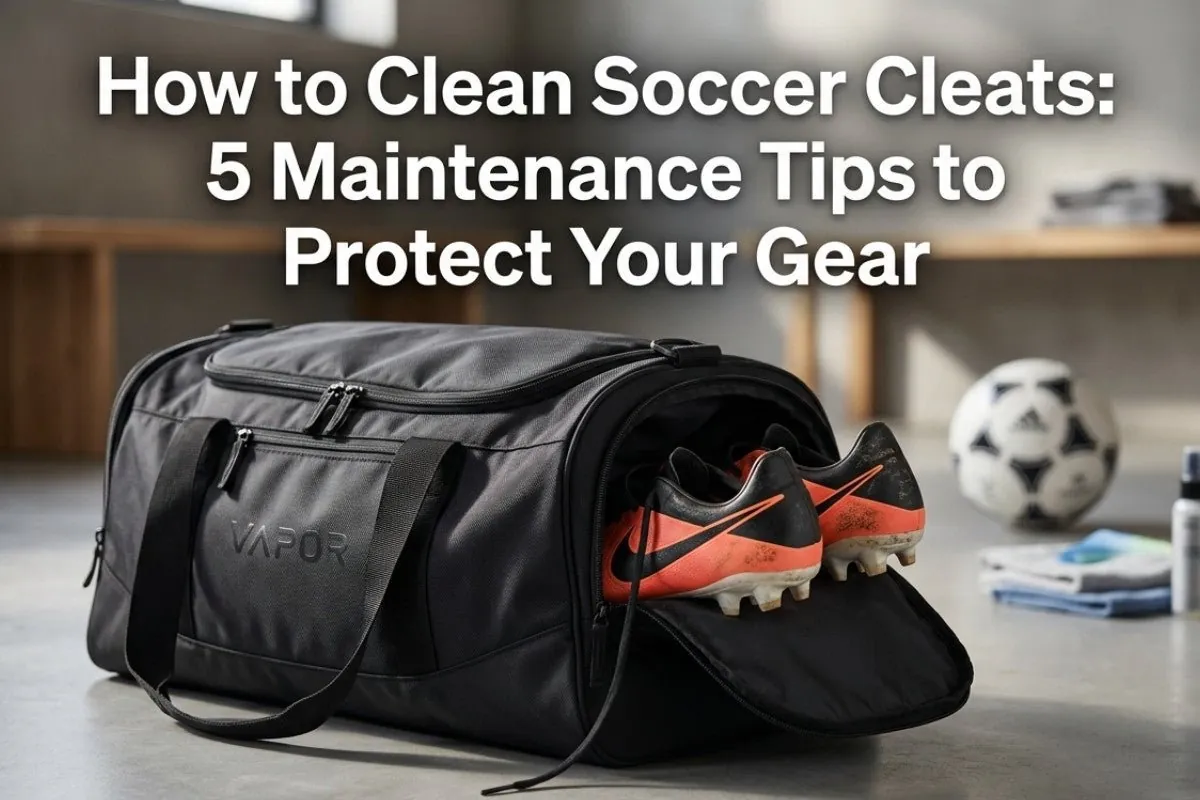
A sudden blast of locker room odor from your gym bag is an all-too-familiar experience. Worse, expensive cleats can crack or split if neglected. Modern soccer boots are precision tools, but mud, turf pellets, and sweat actively degrade materials, reduce touch, and ruin traction. A simple, consistent care routine protects both your gear and your investment.
Immediate Post-Match Care
Pulling stiff, damp cleats out of a bag days after a match is a common mistake. The trapped moisture causes stale smells and can lead to delamination, where the soleplate separates from the upper. Act quickly to prevent damage.
- Clap studs together to dislodge mud from traction patterns.
- Shake out turf pellets that wedge into seams and cause blisters.
- Ventilate immediately by placing boots in a ventilated mesh bag. Plastic bags trap moisture and encourage bacteria growth.
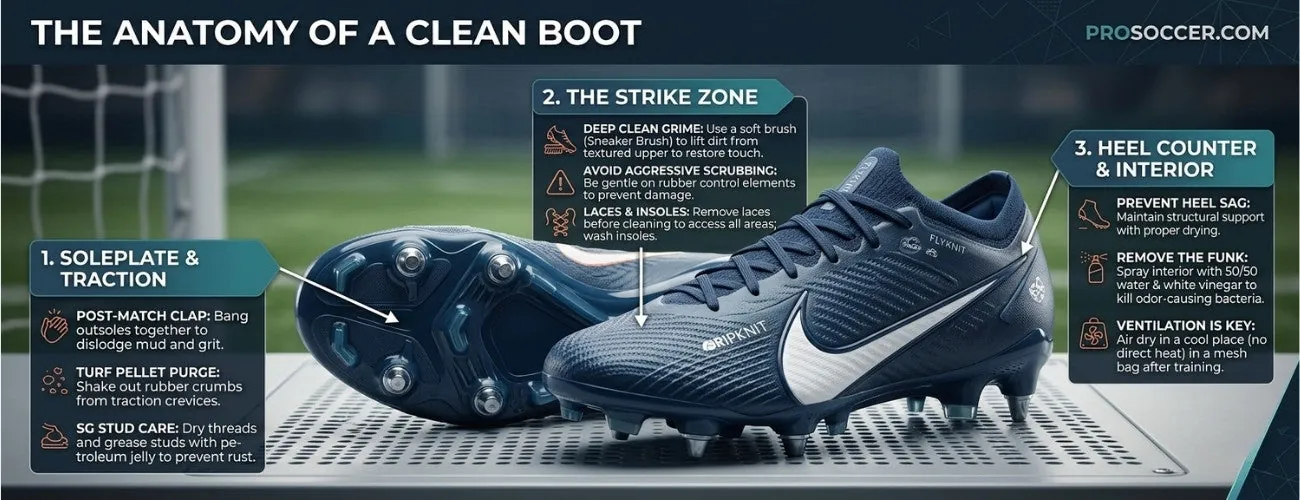
The 24-Hour Rule: Avoid wearing match cleats for consecutive training days. Having a backup pair of turf shoes allows your premium boots 24 to 48 hours to dry completely and maintain their shape.
Eliminating Odor from Soccer Cleats
The familiar locker room stench occurs when bacteria feed on sweat, skin flakes, and moisture inside the synthetic lining. If left untreated, the smell becomes permanent. To kill the source, mix equal parts water and white vinegar in a spray bottle and lightly mist the interior after each game. The vinegar neutralizes bacteria without harming textiles. For ongoing freshness, insert moisture-absorbing deodorizer inserts or cedar shoe balls to wick away residual dampness.
Deep Cleaning the Upper
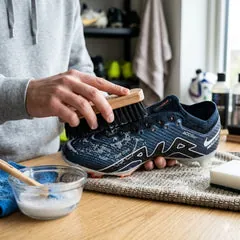
When dust builds up on the grip areas, you lose the sharp, connected feel. Accumulated grit gradually wears away the boot’s fine details. Scrubbing with laces simply drives debris deeper into the eyelets, damaging the fabric. Begin by removing laces and insoles. Use a stiff brush to knock off dried mud. Mix lukewarm water with a drop of mild soap (avoid harsh detergents). Clean the upper with a soft brush using gentle circular motions, then pat dry with a damp microfiber cloth. Never submerge your cleats; soaking compromises the fit and lockdown.
Material-Specific Care
Wet leather boots can stiffen like concrete, while knitted uppers become dull and lose elasticity, leading to blisters. Treat each material correctly.
| Boot Type | Key Care Tool | Top Care Rule |
|---|---|---|
| Natural leather | Leather balsam | Never use heat; moisturize to prevent cracking. |
| Synthetics & knits | Soft toothbrush | Lift dirt from the weave early to avoid stains. |
Proper Drying Methods
Placing wet cleats on a radiator or using a hairdryer causes uneven shrinkage, resulting in stiff padding that rubs and causes blisters. Instead, pack the boots tightly with crumpled newspaper or paper towels to absorb moisture while preserving shape. Set them in a cool room with a fan for slow, even drying.
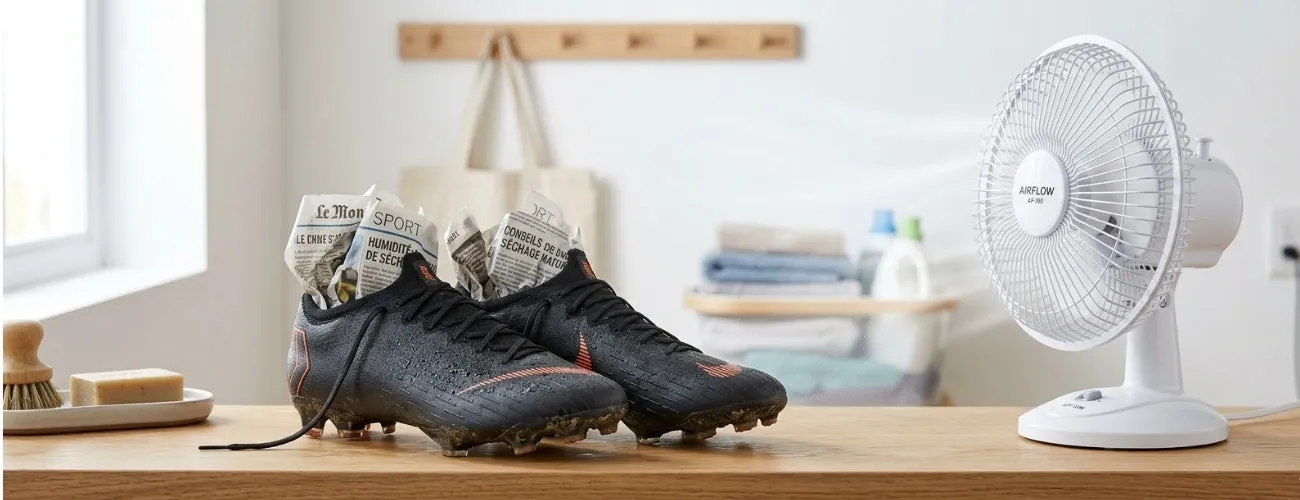
For soft ground (SG) cleats, moisture can rust metal studs. While drying, unscrew the studs, dry the threads, and apply a thin layer of petroleum jelly. This prevents rust and keeps the studs from seizing.
Off-Season Storage
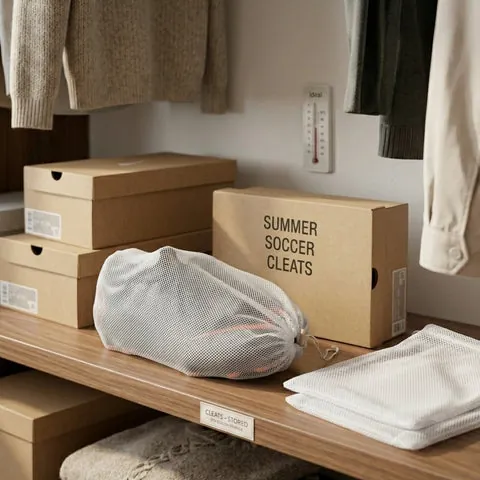
Storing seasonal cleats in a cold, damp basement or a hot attic causes brittle, faded boots with baked-in odors. Internal padding dries out, leaving a flat, uncomfortable feel. Before the new season, perform a deep clean and let the cleats dry completely. Stuff them tightly with paper towels to retain shape, then place them in a breathable mesh bag or cardboard box inside a climate-controlled closet. This keeps the materials flexible for the next season.
Frequently Asked Questions
How do I remove the locker room smell from my cleats?
Odor is caused by bacteria feeding on sweat and moisture. Spray a 50/50 water and white vinegar mix inside after cleaning, or use deodorizer inserts. Always remove damp socks from the cleats immediately after play.
Can I wash my soccer cleats in a washing machine on a delicate cycle?
No. Machine washing soaks internal foam, shifting layers and ruining the tight-lock design. The cycle can also alter the shape of the hard plastic soleplate, leaving you with deformed cleats. Hand-washing is always the best method.
How do I prevent leather boots from becoming stiff after a rainy game?
Water evaporation removes natural oils from the leather, causing fibers to dry out and stiffen. Never expose cleats to direct heat. Once dry, apply a thin layer of leather cream to restore flexibility and softness.
Related search topics
- How to Clean Soccer Cleats 5 Maintenance Tips to Protect Your Gear football guide
- How to Clean Soccer Cleats 5 Maintenance Tips to Protect Your Gear latest updates
 WhatsApp
Looking for affordable football boots and jerseys made in China?
Message us on WhatsApp at +86 151 6027 2505, or find us on Instagram at @luxurycoca.
 Instagram