The Essential Guide to Soccer Rules for New Fans and Players
For newcomers to soccer, the sport can seem fast and complex, but its core principles are straightforward. Played by more than four billion supporters worl
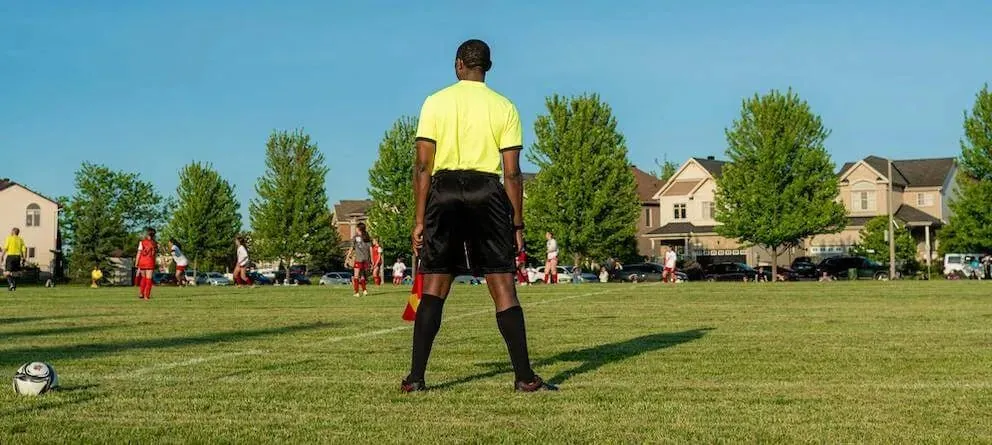
For newcomers to soccer, the sport can seem fast and complex, but its core principles are straightforward. Played by more than four billion supporters worldwide, soccer’s rules ensure fair competition and thrilling action. This guide covers everything from match objectives and field markings to fouls, cards, and video review – making the world’s most popular game easy to grasp.
Fundamentals of Soccer Rules
Soccer (called football outside North America) has a simple goal: outscore the opponent before the match ends. A defined set of laws keeps play fair and exciting. Here are the key rules every beginner should know:
- No hands rule – Outfield players cannot intentionally touch the ball with their hands or arms. Only the goalkeeper inside their own penalty area may handle the ball.
- Match duration & stoppage time – A standard match lasts 90 minutes, divided into two 45‑minute halves. The referee adds stoppage time at the end of each half for delays such as injuries or substitutions.
- Kickoff procedure – A kickoff starts each half and restarts play after a goal. The ball must move forward, and all players must remain in their own half until the ball is in play.
- Throw‑ins – When the ball crosses a sideline, the opposing team throws it in from the point it left play. The thrower must keep both feet on the ground and deliver the ball with both hands over the head.
- Offside rule – A player is offside if they are closer to the opponent’s goal than the second‑to‑last defender when the ball is played to them. Offside only applies in the opponent’s half and during active play.
- Fouls and free kicks – Tripping, pushing, holding, and other unfair contact result in a direct or indirect free kick for the fouled team.
- Penalty kicks – Awarded when a foul occurs inside the defending team’s penalty area. A single shooter faces the goalkeeper from the penalty spot.
- Substitutions – Teams are allowed a limited number of player changes (typically up to five in most competitions), made with the referee’s permission.
- Yellow and red cards – A yellow card is a warning for misconduct; a red card means ejection. Two yellows in one match equal an automatic red.
- Referee authority – The head referee enforces the laws and makes final decisions. Once play restarts, those decisions cannot be reversed.
How a Soccer Match Progresses from Start to Finish
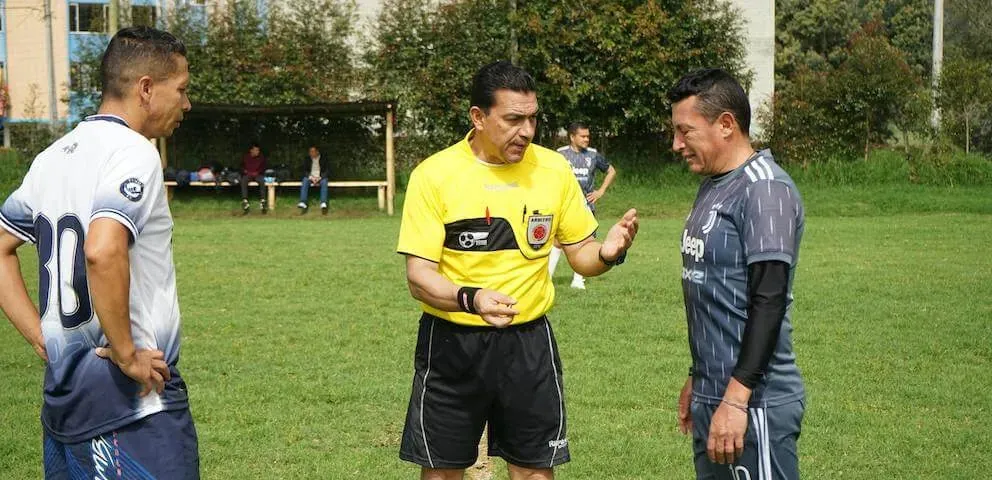
Soccer follows a clear rhythm despite its fluid appearance. Understanding each stage helps you follow the action and anticipate what happens next.
Kickoff
- The match begins with a kickoff from the center circle after a coin toss. The winning team chooses to kick off or select which side to attack.
- All players must stay on their own half until the ball is touched.
- The ball must move forward, and the kicker cannot touch it again until another player does.
- Kickoffs also occur after each goal, with the conceding team restarting.
First Half
- 45 minutes of continuous play (plus stoppage time).
- Teams aim to control possession, create scoring chances, and defend.
- The referee stops play for fouls, injuries, or substitutions, restarting with throw‑ins, goal kicks, corner kicks, or free kicks.
Halftime
- A 15‑minute break.
- Teams regroup, hydrate, and adjust tactics. Coaches may make substitutions or formation changes.
- Sides switch to balance field advantages (sun, wind, pitch slope).
Second Half
- The other team takes the kickoff.
- Another 45 minutes of regulation time (plus stoppage time).
- Yellow and red cards from the first half carry over.
Stoppage Time
- Added at the end of each half to compensate for delays (injuries, substitutions, time‑wasting).
- The fourth official shows the minimum added minutes; the referee can extend further if needed.
- Goals scored during stoppage time count fully. The half ends only when the whistle blows.
Extra Time (Knockout Stages)
- If a knockout match is tied after regulation, two 15‑minute extra‑time halves are played, with a short break between them.
- Some competitions allow an additional substitution.
- Most formats do not use a golden goal; play continues until the full extra time ends.
Penalty Shootout
- If the score remains tied after extra time, each team takes five alternating penalty kicks.
- If still level, sudden death rounds follow – the first team to lead after an equal number of kicks wins.
- Only players on the field at the end of extra time may participate.
- The goalkeeper must stay on the goal line until the ball is struck.
- The team with the most successful kicks wins the match.
Soccer Field Rules and Markings
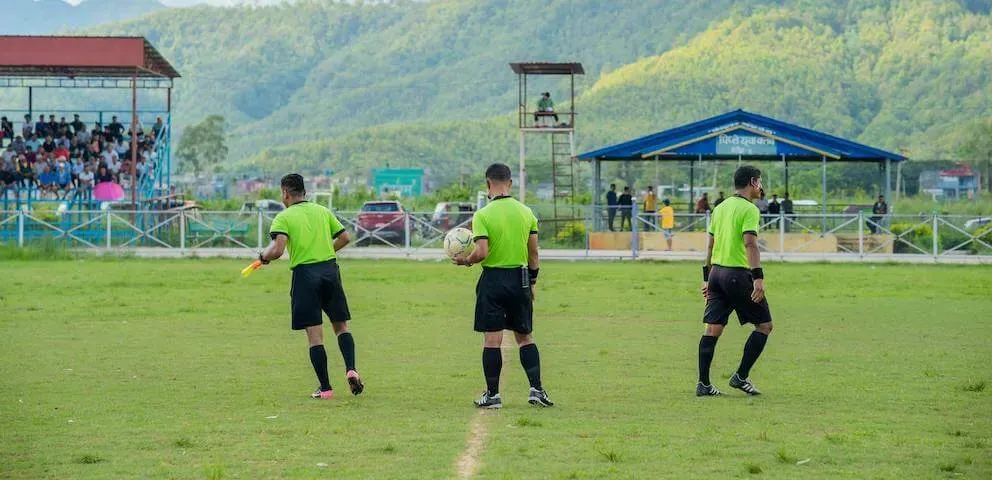
Every match is played on a rectangular field with specific markings that govern play.
- Field dimensions – International matches range from 100 – 130 yards (91.4–118.9 m) long and 50 – 100 yards (45.7–91.4 m) wide.
- Touchlines (sidelines) – Long boundaries; a ball crossing them results in a throw‑in for the opposing team.
- Goal lines (end lines) – Short lines at each end. A ball crossing between the posts scores a goal; otherwise, a goal kick or corner kick follows.
- Goal area (6‑yard box) – Small box inside the penalty area from which goal kicks are taken.
- Penalty area (18‑yard box) – Larger rectangle around each goal. Fouls inside award a penalty kick. Goalkeepers may use hands only within this area.
- Center circle – 10‑yard radius at midfield. Opponents must stay outside during kickoffs.
- Penalty spot – 12 yards from the goal line; where penalty kicks are taken.
- Corner arcs – Quarter‑circles at each corner where the ball is placed for a corner kick.
- Halfway line – Divides the field; players must stay on their own side until a kickoff.
- Technical area – Designated sideline zone for coaches and substitutes.
Team and Player Regulations
Soccer’s Laws of the Game are maintained by the International Football Association Board (IFAB). They cover squad size, substitutions, and player conduct.
Number of Players
- Each team fields 11 players (including one goalkeeper).
- A match cannot continue if a team has fewer than seven players on the field.
- Injuries, red cards, or absences may reduce numbers; falling below seven usually forces the match to stop, possibly resulting in a forfeit.
Substitution Rules
- Most competitions allow up to five substitutes per match (league or tournament rules may vary).
- Substitutions occur at the halfway line with the referee’s permission, usually during stoppages or at halftime.
- Once substituted off, a player generally cannot return (except in certain youth or recreational leagues).
Fouls, Penalties, and Disciplinary Cards
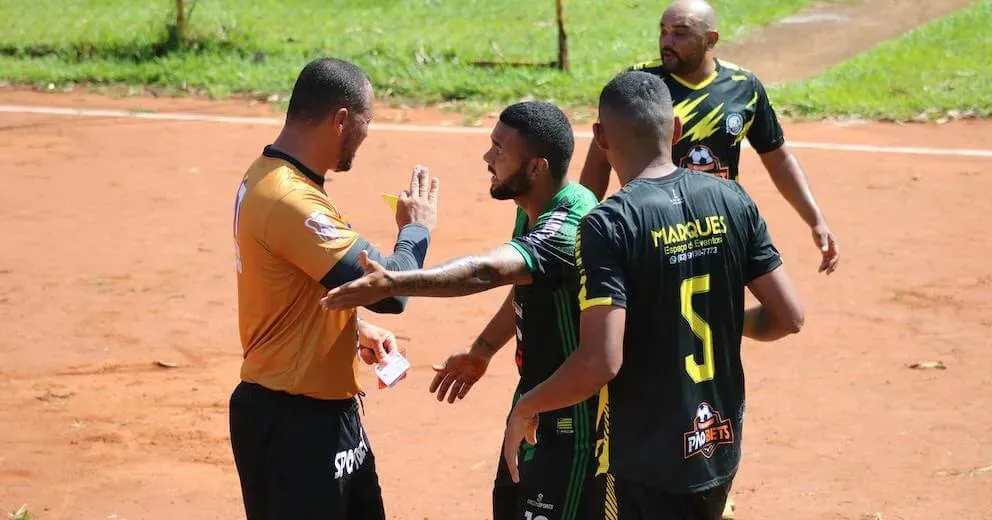
Soccer is physical but governed by clear rules to ensure safety and fairness. The referee punishes infractions with free kicks, penalty kicks, or cards.
Minor Offenses (Free Kicks)
- Tripping – Knocking down an opponent with the foot or leg.
- Pushing – Using hands or body to shove.
- Holding – Grabbing an opponent’s jersey or arm.
- Hitting – Swinging arms or elbows, even unintentionally.
- Tackling from behind – Dangerous and almost always penalized.
- Handball – Outfield players touching the ball with hand or arm.
Goalkeeper‑Specific Rules
- Cannot handle a ball deliberately passed back by a teammate (indirect free kick awarded).
- Cannot handle a ball thrown in by a teammate.
- Cannot hold the ball longer than six seconds.
- Cannot touch the ball again after releasing it until another player does.
Yellow Card
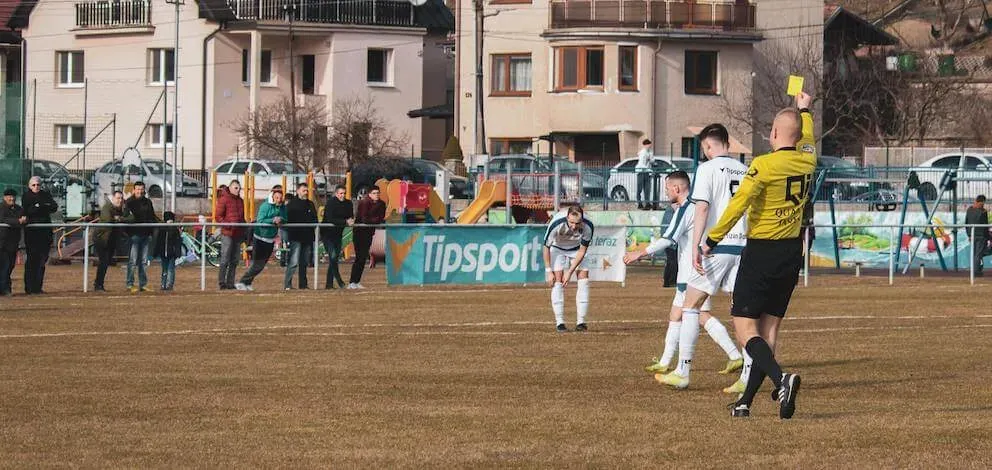
A formal warning for unsporting or reckless behavior. Common reasons include:
- Unsporting conduct (reckless tackles, time‑wasting, diving)
- Dissent (arguing with the referee)
- Persistent infringement (repeated minor fouls)
- Delaying the restart of play
- Failing to respect the required distance on free kicks or corners
- Entering or leaving the field without permission
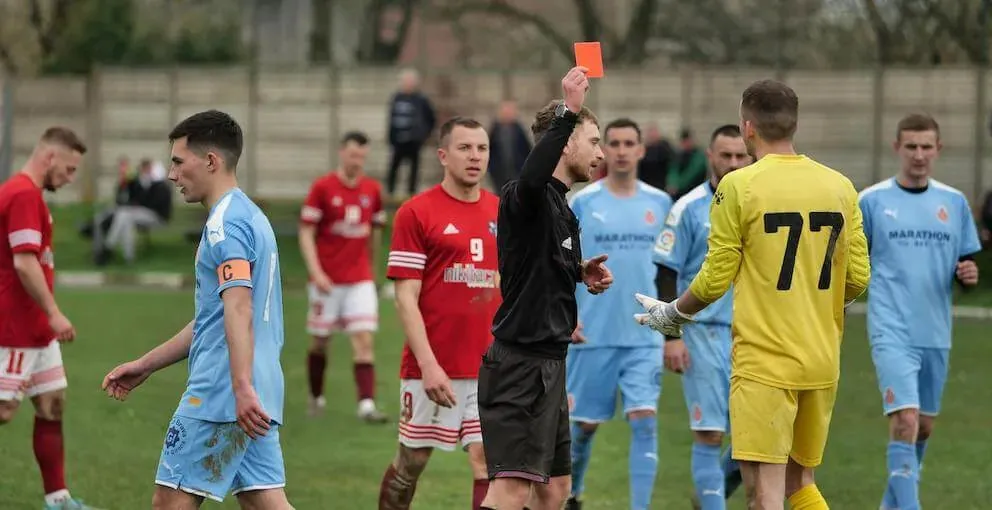
Red Card
 ]
]
Immediate ejection from the match. The player’s team must continue with one fewer player. Grounds for a red card:
- Serious foul play (dangerous, excessive‑force tackles)
- Violent conduct (punching, elbowing, intentional harm)
- Spitting at anyone
- Denying a goal by handball (unless by the goalkeeper inside the box)
- Denying a clear goalscoring opportunity by a foul
- Offensive, insulting, or abusive language or gestures
- Receiving a second yellow card in the same match
Equipment Rules

Players must wear approved gear that meets safety and fairness standards.
- Cleats – Soccer‑specific footwear with molded or screw‑in studs. Metal studs are allowed unless a competition restricts them. No toe cleats.
- Soccer ball – Size 5 for adults (sizes 3–4 for younger players). Must be spherical, 410–450 g, inflated to 8.5–15.6 psi.
- Shin guards – Mandatory, worn under socks, must provide adequate protection. Referees check them before matches.
- Jersey – Matching team jerseys with unique numbers. Goalkeeper jerseys must differ in color from both teams and the referee.
- Socks – Must fully cover shin guards. Usually match the team kit.
- Shorts – Standard uniform shorts. Any visible undergarments must match the shorts’ color.
VAR (Video Assistant Referee) Rules

Video Assistant Referee technology helps correct clear and obvious errors on critical decisions. The head referee retains final authority.
- Goals – VAR checks for fouls, offside, or handball in the buildup.
- Penalty decisions – Reviews whether a penalty should or should not be awarded, including simulation or missed fouls.
- Red cards – Direct red card offenses (not second yellows) can be reviewed.
- Mistaken identity – If the referee penalizes the wrong player, VAR can correct it.
The VAR team reviews footage and communicates with the head referee, who may consult a pitch‑side monitor before making a final call.
The 17 Laws of Soccer

The official Laws of the Game, set by IFAB, apply at all levels from youth leagues to the FIFA World Cup.
| Law | Topic |
|---|---|
| 1 | The Field of Play – dimensions, lines, goals, surface |
| 2 | The Ball – size, weight, pressure, replacement |
| 3 | The Players – team size, substitutes, minimum players |
| 4 | The Players’ Equipment – jersey, cleats, shin guards |
| 5 | The Referee – enforces laws, final authority |
| 6 | The Other Match Officials – assistants, VAR, fourth official |
| 7 | The Duration of the Match – 90 minutes, stoppage time, extra time |
| 8 | The Start and Restart of Play – kickoffs, drop balls |
| 9 | The Ball In and Out of Play – when the ball is in play |
| 10 | Determining the Outcome of a Match – goals, tiebreakers, shootouts |
| 11 | Offside – position, timing, violations |
| 12 | Fouls and Misconduct – types, card offenses |
| 13 | Free Kicks – direct and indirect |
| 14 | The Penalty Kick – procedure, fouls, scoring |
| 15 | The Throw‑In – sideline restart rules |
| 16 | The Goal Kick – restart from the 6‑yard box |
| 17 | The Corner Kick – placement, defender distance |
Soccer Rules FAQs
1. Which rule is hardest to learn?
The offside rule challenges most newcomers. It depends on a player’s position relative to the second‑to‑last defender at the moment the ball is played. It is among the most debated rules in the sport.
2. Is there a mercy rule in soccer?
Professional leagues generally do not use a mercy rule. However, youth or recreational matches may end early if one team leads by a very large margin (often seven or more goals) to avoid discouragement.
3. What is the most important rule in soccer?
The no‑hands rule for outfield players is fundamental. Only the goalkeeper, inside the penalty area, may use hands. This principle defines the sport and distinguishes it from other team games.
Related search topics
- the main rules of soccer
- the basic rules of football
- the main rules of football
- the 10 rules of football
 WhatsApp
Looking for affordable football boots and jerseys made in China?
Message us on WhatsApp at +86 151 6027 2505, or find us on Instagram at @luxurycoca.
 Instagram